.jpg)
How an Export Import Data Provider Can Grow Your Business Fast
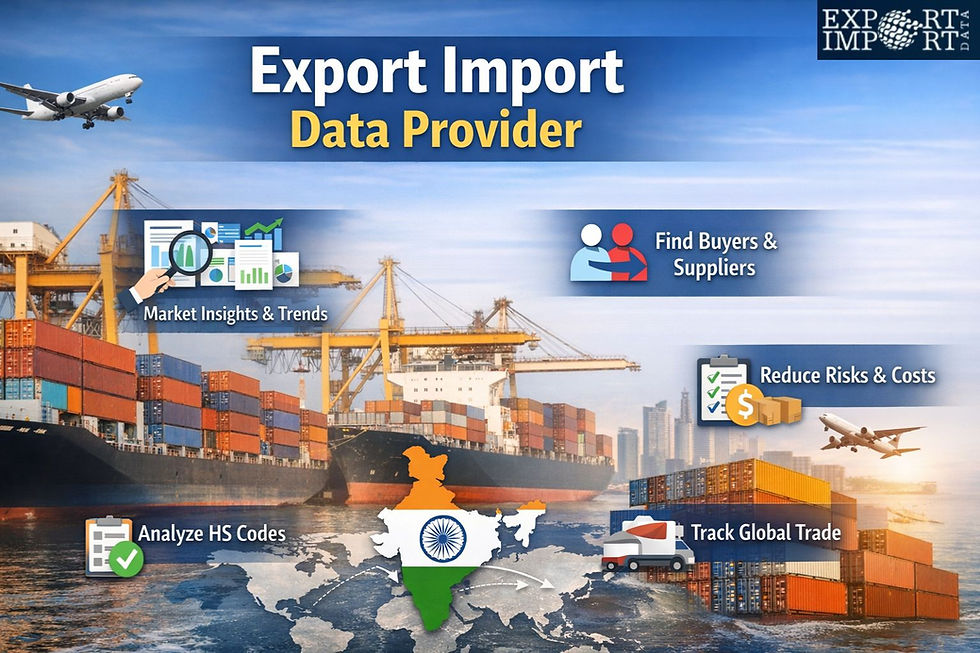
In today’s competitive global market, growth depends on how well you understand trade movements, buyer demand, and supplier activity. Businesses that rely only on assumptions often struggle to scale. This is where reliable trade intelligence becomes a strong growth tool. Working with an Export Import Data Provider helps companies move faster, reduce risk, and make smarter decisions based on real numbers rather than guesswork.
Understanding the Value of Trade Data
Every shipment that crosses borders creates useful information. This includes product details, quantities, values, ports, and partner countries. When businesses gain access to accurate Import and Export Data, they can see what is really happening in the market. This clarity allows companies to identify trends early, spot rising products, and respond before competitors do.
Instead of spending months testing markets blindly, businesses can focus their efforts where demand already exists.
Faster Market Entry With Data-Driven Decisions
Expanding into new regions can be risky without proper insight. A dependable Import Export Data Provider gives businesses a clear view of which countries import specific products, who the active buyers are, and how often shipments move. This information shortens the learning curve and helps companies enter markets with confidence.
By knowing where competitors are shipping and what buyers prefer, businesses can design better pricing and outreach strategies from day one.
Finding Real Buyers and Reliable Suppliers
One of the biggest challenges in global trade is finding genuine partners. Trade intelligence sourced from an Export Import Data Bank helps businesses identify verified importers and exporters based on actual shipment records. This removes the uncertainty that comes with cold outreach or unreliable directories.
With accurate partner details, sales teams can focus on leads that already show buying behavior, which improves conversion rates and saves time.
Improving Product Strategy Using HS Classification
Product classification plays a major role in international trade. Understanding HS codes helps businesses track specific goods across borders. Each product category has its own trade pattern, demand cycle, and pricing range.
Access to a well-structured list of HS Codes allows companies to analyze which product variations perform better in different markets. This insight supports smarter product positioning and helps businesses avoid costly classification errors.
Scaling Operations With Country-Specific Insights
Country-level data brings powerful advantages. Businesses targeting Asia often rely on Import Export Data India to understand regional demand, port activity, and supplier networks. This information supports faster scaling by showing which products move consistently and which face seasonal changes.
Using India Import Export Data, companies can plan inventory more accurately and align logistics with real trade flows instead of estimates.
Reducing Risk and Cost in Global Trade
Trade involves multiple risks, including price fluctuations, demand drops, and unreliable partners. Access to Export and Import Data helps businesses reduce these risks by providing a clear picture of shipment frequency, average pricing, and volume trends.
When companies also analyze Import and Export Data India, they can predict market shifts earlier and adjust sourcing or sales strategies before losses occur.
Gaining Competitive Advantage With Historical Records
Historical trade records act like a roadmap. Insights from an Import Export Data Bank help businesses track long-term trends and competitor growth patterns. This knowledge allows companies to forecast demand and prepare marketing campaigns in advance.
Studying India Import and Export Data also reveals which regions are expanding faster, giving businesses the chance to invest resources where growth is most likely.
Supporting Sales and Marketing Teams
Sales and marketing teams perform better when backed by solid data. Using Indian Export and Import Data, businesses can build targeted campaigns for specific industries or regions. Marketing messages become more relevant, and sales outreach feels timely rather than random.
Similarly, Indian Import Export Data helps teams understand buyer preferences, shipment cycles, and ideal contact timing, leading to higher engagement.
Strengthening Supply Chain Planning
Supply chain delays can slow growth. Insights from Import and Export Data India help businesses identify congestion points, preferred ports, and reliable shipping routes. With this knowledge, companies can plan smoother logistics and reduce unexpected delays.
Better planning leads to faster deliveries, improved customer satisfaction, and stronger brand trust in international markets.
Turning Data Into Long-Term Growth
Using trade intelligence is not just about short-term gains. When businesses consistently analyze Export Import Data Provider insights, they develop stronger strategies for expansion, pricing, and partnerships. Data-backed decisions help companies adapt quickly to market changes and stay ahead of competition.
In the long run, businesses that invest in quality trade intelligence grow faster, make fewer mistakes, and build stronger global networks.
Final Thoughts
Global trade success depends on clarity, timing, and trust. Access to accurate trade intelligence allows businesses to move with confidence and speed. By using reliable data sources wisely, companies can unlock new markets, connect with genuine partners, and scale without unnecessary risk. For businesses aiming to grow quickly and sustainably, platforms like Export Import Data play a valuable role in turning raw trade information into real business opportunities.


Comments